

Curved kitchen island designs are rapidly redefining what a modern kitchen can be, offering a blend of visual softness and robust function that challenges the notion that kitchens need to be filled with hard angles or straight lines.
Key Takeaways
- Curved kitchen islands are rising in popularity, with a 140 percent increase in new remodels from 2019 to 2026.
- Rounded kitchen islands solve practical issues by improving flow, seating, and offering subtle design advantages.
- Be aware of custom-fabrication costs and hidden challenges—but the functional, aesthetic returns can justify the investment in most high-end kitchens.
- Why Curved Kitchen Islands Are Trending in 2026
- The Design & Functional Benefits of Rounded Kitchen Islands
- Common Challenges & How to Solve Them
- Underexplored Design Opportunities for Curved Islands
- Expert Tips: Making a Curved Island the Centerpiece
- Curved Kitchen Islands: Inspiring Real-World Examples
- FAQs
Why Curved Kitchen Islands Are Trending in 2026
Curved kitchen island layouts have moved from experimental custom installs into the mainstream—especially as homeowners and designers grow tired of “boxy” interiors. In 2026, about 12 percent of all new kitchen remodels included a curved or rounded island, up dramatically from 5 percent in 2019—a striking 140 percent increase in just five years. This shift reflects not only the search for softer, more organic forms but also the desire for kitchens that feel inviting and inherently functional. With curved island ideas dominating design trend forecasts and client requests, it’s clear that this movement is more than a fleeting style moment.
The Design & Functional Benefits of Rounded Kitchen Islands
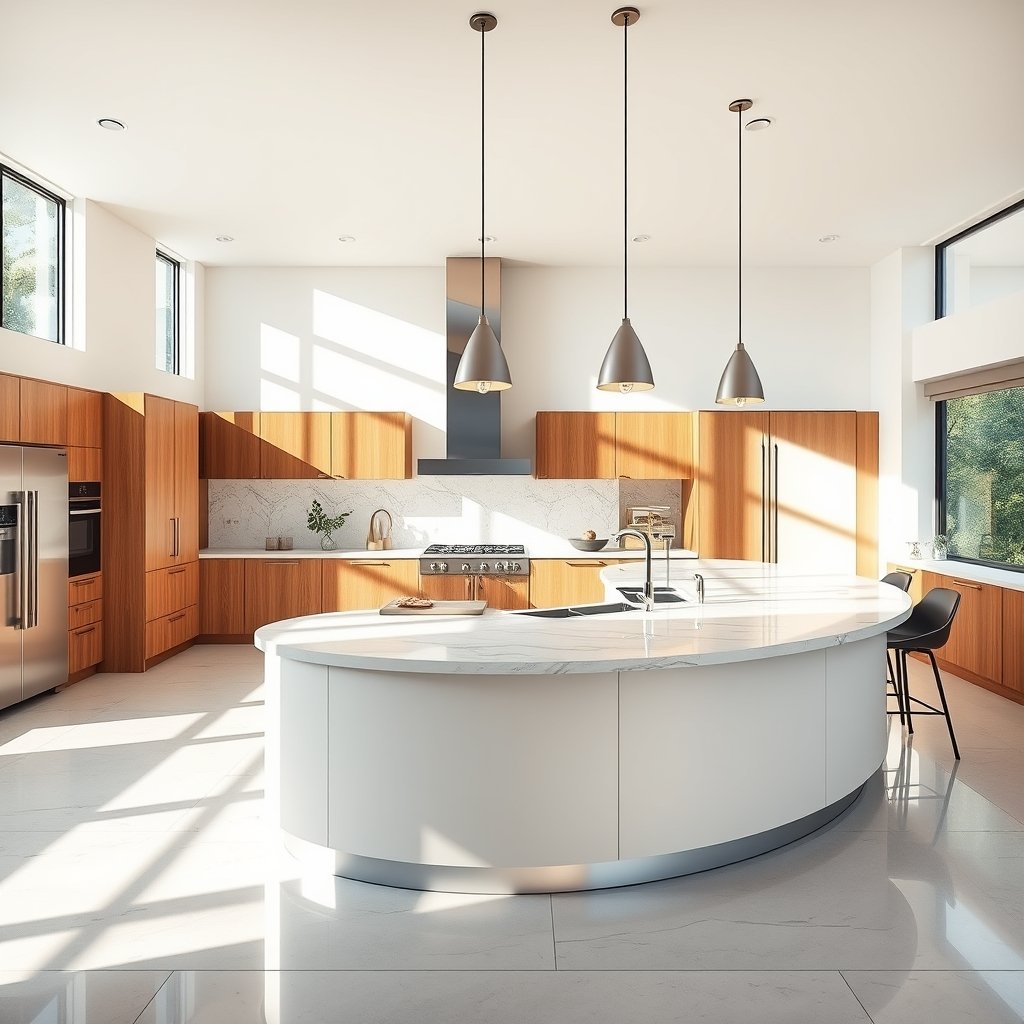
Opting for a rounded kitchen island transforms both the style and the usability of a kitchen. Visually, curved forms break up the monotony of straight lines, instantly making a space feel softer and more welcoming. This “softening” is especially powerful in large kitchens or open-plan spaces, anchoring the area without adding bulk. Functionally, the benefits are just as pronounced—curved islands facilitate traffic flow, minimizing bottlenecks as people move around the kitchen. The subtle arc or ellipse creates more ergonomic seating opportunities, allowing people to interact comfortably without sharp corners in the way. Many designers and homeowners have chosen this silhouette for exactly these reasons, as highlighted in the 2024 Houzz Kitchen Trends Study and in advanced guides on kitchen island shapes.
Common Challenges & How to Solve Them
While a curved kitchen island is visually striking and function-forward, several challenges are worth noting. Radius cabinet boxes and custom stone countertops are required, and these significantly drive up both material and labor costs—sometimes between 30 and 50 percent more than standard straight-edged builds. Complexities compound if you want integrated plumbing or appliances, as non-rectilinear forms often limit available space, forcing creative solutions for sink placement or storage depth. standard stools don’t always fit the curvature, leading to tricky seating arrangement decisions. Hardware installation (drawers, pulls, slides) must be meticulously planned so that everything aligns visually across a curved plane. Awareness—and early involvement of experienced tradespeople—can save time and headaches down the line.
| Issue | Rectangle Island | Curved Island |
|---|---|---|
| Base cabinet fabrication | Standard | Custom (30–50% higher cost) |
| Countertop installation | Pre-fabricated options | Custom radius cutting/labor |
| Seating arrangement | Standard bar stools | Requires custom spacing/selection |
| Plumbing/hookup access | Straightforward placement | May need creative routing |
All of this underscores the importance of collaboration between your designer, cabinetmaker, and countertop specialist—especially if you’re also after hidden kitchen storage or want to integrate features like appliance garages or pocket door cabinets into your island’s curve.
Underexplored Design Opportunities for Curved Islands
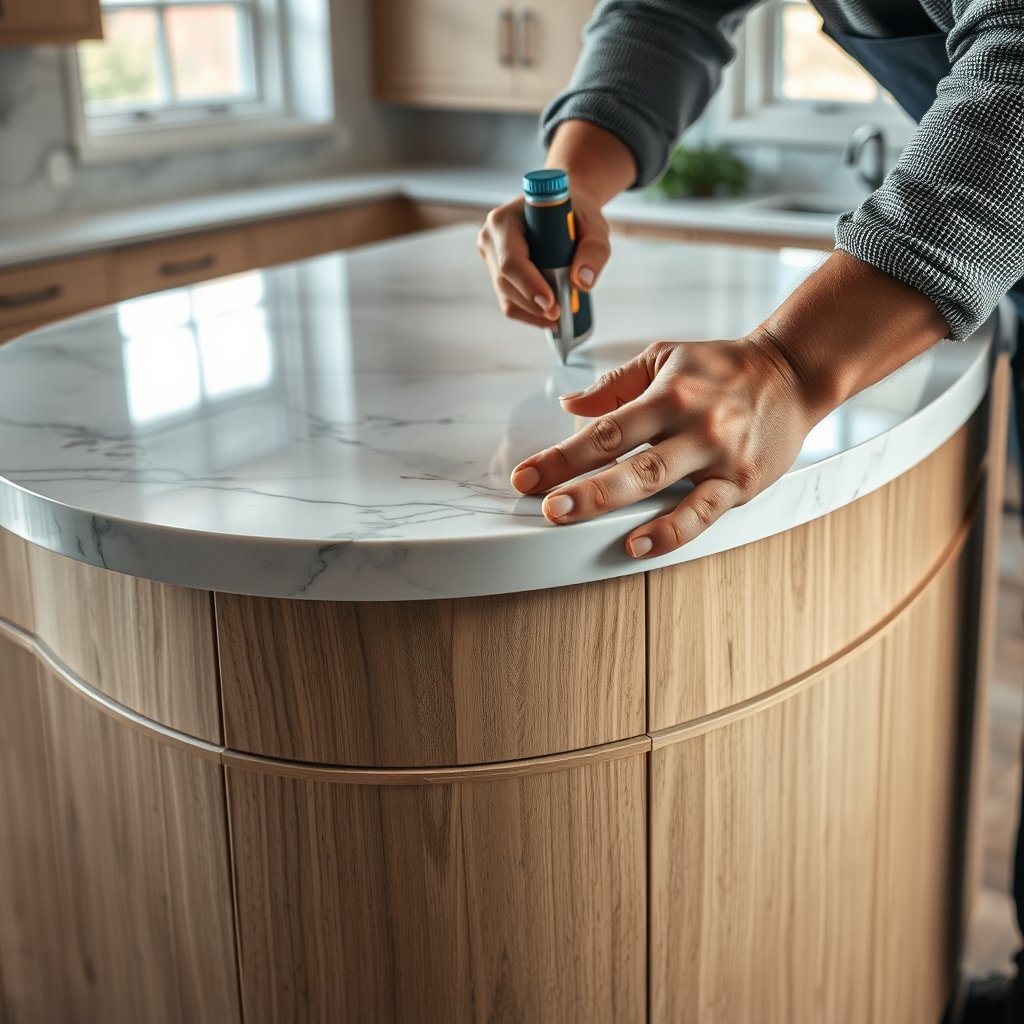
Most competitor coverage stops at appearance, cost, and traffic flow—but there is so much more potential. Consider ergonomic seating: carefully calculating the arc radius means every seat can be comfortable with ample leg and elbow room. integrated arc lighting—recessed LEDs or a flexed strip pendant—can echo the island’s shape, giving both ambient and task-specific illumination (for bold options, check designer lighting ideas). Modular construction is rarely discussed but allows phased upgrades: base cabinets can be installed in sections, or the seating sweep can be reconfigured later. Some high-end projects even add acoustic panelling beneath the arc to reduce kitchen noise, a subtle but powerful hack for open-plan homes. Stone and wood tops with continuous-vein stone layout further enhance the “flow” and reduce visual clutter, as shown by recent innovations from leading cabinet pros. These advanced curved island ideas let you design for daily living—rather than just for the reveal photos.
If you want to layer softness even further, look into limewash finishes or Venetian plaster on adjacent walls—these tactile finishes complement arched kitchen design while adding character without competing for attention.
Expert Tips: Making a Curved Island the Centerpiece
In higher-end remodels, a curved kitchen island isn’t just a focal point; it’s the architectural anchor for the room. Here’s how to maximize value and function:
- Start with your workflow needs: prep, serving, and entertaining. Map how you move in your space, then tailor the arc to match natural walking lines.
- For investment return, choose timeless materials (like white oak, walnut, or veined marble) that play well with trends but have enduring appeal.
- Match or contrast the surrounding cabinetry. A different finish or subtle color shift—paired with color-drenched walls—can highlight the island’s unique silhouette.
- If possible, integrate under-counter storage solutions such as curved rollout trays or soft-close pullouts designed specifically for radius cabinetry.
- Lighting matters. Use a custom pendant or concealed LED system that echoes the sweep of your rounded countertops for a cohesive effect.
As found in expert guides to modern kitchen islands, investing up-front can pay dividends in durability, usability, and resale outcomes.
Curved Kitchen Islands: Inspiring Real-World Examples
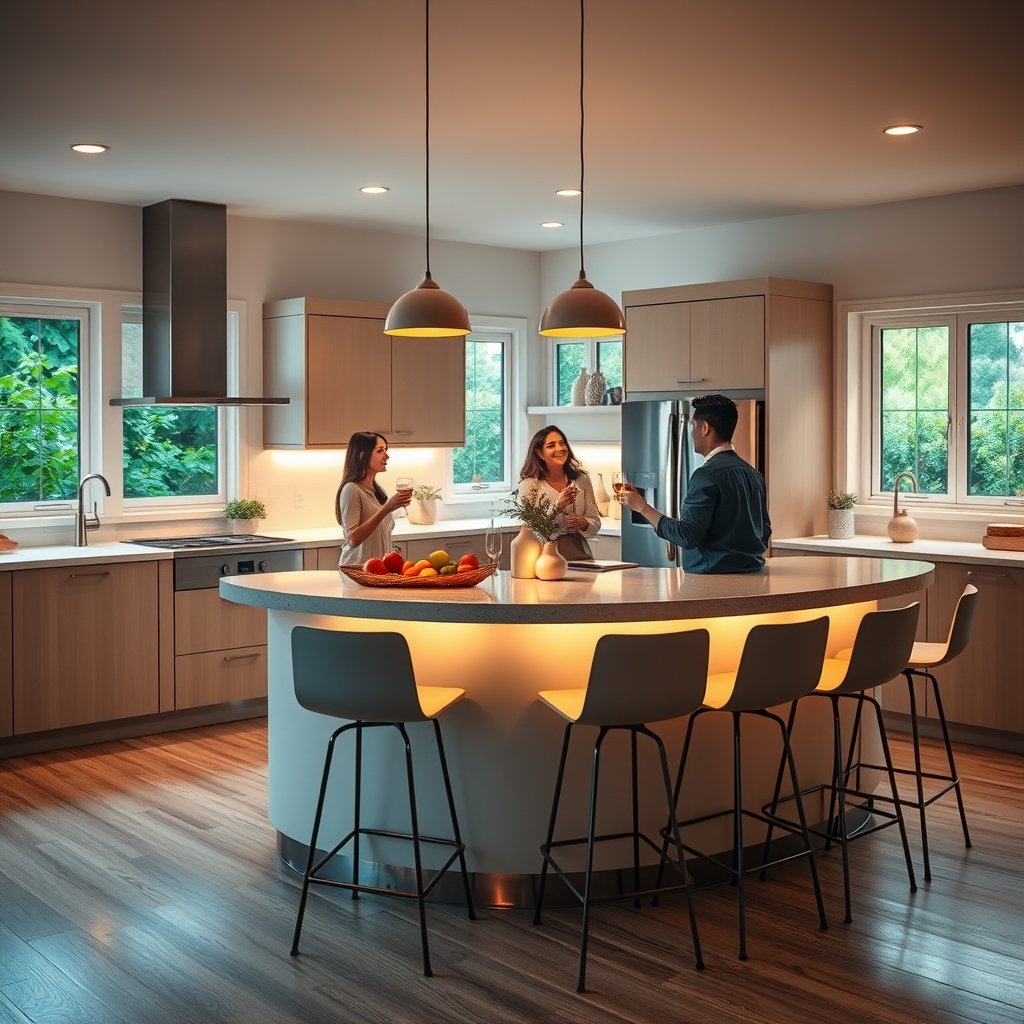
Designers nationwide are now using curved island ideas to transform everything from small galley kitchens to sprawling open plans. In one Boston renovation, a white oak crescent-shaped island softened a contemporary condo, while seating six comfortably along its curve. A family home in Michigan integrated an ellipse island with butler’s pantry access and banquette-style seating, resolving the challenge of dining in a limited footprint. Several West Coast remodels paired arched kitchen design elements—radius islands, rounded corner cabinets, and soft-edge counter ends—to create continuous sightlines and improve flow between cooking, prep, and family gathering zones. These solutions also echo best practices in on-trend kitchen remodeling and reflect what’s making soft interior design so influential in luxury spaces.
FAQs
Does a curved kitchen island cost significantly more than a rectangular one?
Yes. Due to custom-radius cabinet fabrication and the need for curved stone or wood countertops, expect to pay 30 to 50 percent more than a standard rectangular island. The materials and skilled labor involved drive up the total investment.
Can I use standard bar stools with a rounded kitchen island?
Standard stools may not fit comfortably along a deep curve. Look for adjustable swivel stools or consider custom-built seating that matches the island’s radius for the best fit and comfort.
Are there space-saving tricks for small kitchens using curved islands?
Absolutely. Compact quarter-round, semi-oval, or peninsula-style curved islands can add seating and prep space without crowding the room. Integrate features like appliance garages or under-counter storage for maximum efficiency.
How do I match a curved island with other kitchen design elements?
Pair curved islands with subtle “softenings” elsewhere—arched doorways, rounded cabinet corners, or fluffy limewash wall finishes—to create harmony. Lighting that echoes the arc of the countertop adds even more unity.
Is a curved kitchen island a good resale investment?
In higher-end markets, a well-executed curved kitchen island can increase both perceived value and buyer interest by anchoring the kitchen with a memorable, functional center. Quality of execution matters, so invest in experienced pros and timeless materials.
Conclusion
The curved kitchen island trend is now shaping the most exciting, functional, and visually inviting kitchens of 2024 and beyond. From ergonomic seating sweeps to integrated lighting and continuous-grain countertops, this approach lets you combine soft architectural forms with high-level problem-solving for both beauty and practicality. If you’re ready to invest in a curved kitchen island as the centerpiece of your renovation, start by mapping your needs and bring in experts from the start. You’ll enjoy a kitchen that truly stands out. Need more ideas about storage, finishes, or lighting? Explore our guides to hidden kitchen storage, wall finishes, or statement lighting—or reach out to our team for personal advice!

[…] and supply guides, see the full Jerry’s guide or explore trending ideas for spa bathrooms, curved kitchen islands, and more at […]
[…] dramatically influence budgets. When you’re planning for a minimalist kitchen design or adding a curved kitchen island, factor in design trends as they often require custom work and specialized […]
[…] For renters or those who want a low-impact upgrade, consider DIY and wireless systems—but verify that you can export your settings or footage if you move. Integration doesn’t just mean linking gadgets; it’s about a frictionless, reliable workflow that adds peace of mind. For more on future-proof interior upgrades, check out modern home design trends. […]