

### Blog Post:
Best Workbench for Garage—if you’re setting up your garage workspace in YYYY, your work surface can make or break your projects. Whether you’re into woodworking, auto maintenance, or inventive DIY, choosing the right garage workbench means you’ll waste less time, keep your tools organized, and actually enjoy your garage. This isn’t about picking the flashiest table—it’s about durability, features pros actually use, and avoiding the common frustrations that most “best workbench for garage” articles gloss over.
Key Takeaways
- Top-rated garage workbenches in YYYY stand out for sturdy frames, adjustable features, and built-in organization—yet many guides miss crucial ergonomic or power details.
- Common pitfalls include wobbling under heavy loads, thin wheels, tricky assembly, and power strip limitations (especially with affordable models).
- New “must-have” features for YYYY include height adjustability, modular expansion, integrated dust management, warranty coverage, and even sustainability considerations.
- Best Workbench for Garage: YYYY’s Top-Rated Models Compared
- Which Features Really Matter? What to Look for in a Garage Workbench
- Real-World Feedback: Common Complaints and Drawbacks
- DIY Workbench vs. Ready-Made: Cost, Difficulty, and Customization
- New Essentials Missing from Top Ranked “Best Workbench for Garage” Lists
- Garage Workbench FAQs: Buyer Considerations for YYYY
- Final Recommendations: Matching the Right Workbench to Your Needs
Best Workbench for Garage: YYYY’s Top-Rated Models Compared
If you want a garage workbench that stands up to tough DIY and pro use, focus on stability, materials, and modern features. This year’s testing and user reviews consistently highlight a few front-runners:

- Kobalt 72-inch Silver Wood (≈$250): Hefty surface, simple assembly, built-in pegboard and power strip. Praised for value and adjustability [source].
- Sjobergs Scandi Plus 1825 (≈$340): Beech-wood classic, precision-crafted, upgradeable with vises—favored by woodworking enthusiasts.
- Seville Classics Heavy-Duty Pegboard (≈$320): Steel frame, solid top, magnetic tool strip, focused LED lighting, ample hooks and holders [source].
- Husky 8-foot Steel and Wood Bench (≈$700): Huge weight capacity (up to 1,450 lb), steel legs, soft-closing drawers, height crank, outstanding durability [source].
- CAMMOO 60-inch Adjustable (≈$350): Mobile, easily height-adjustable, praised for compact garages and fast-paced projects [source].
- Betterhood Mobile Bench (≈$380): Modular shelving, locking wheels, adaptable for mixed-use garages, but less rigid under heavy machines.
All deliver generous workspace and creative storage, but you’ll notice most cut corners in one or two areas—making it critical to pinpoint your actual needs.
Looking for garage organization ideas too? Check these storage solutions for more ways to clear clutter and keep your tools at hand.
Which Features Really Matter? What to Look for in a Garage Workbench
Don’t be distracted by flashy add-ons. Start by checking these essentials when choosing a garage workbench or workshop table:
- Frame Strength & Stability: Heavy gauge steel, robust fasteners, and properly braced legs stop annoying wobble and rattling under pressure.
- Surface Area: A minimum of 48 inches wide will handle most hobbies, but consider 72 inches or more for woodworking or automotive projects.
- Work Surface Material: Solid wood or multi-layer plywood stays quieter, but powder-coated steel tops resist stains and abuse from solvents or welding.
- Integrated Storage: Look for built-in drawers, shelves, pegboards, or modular brackets—these tame the tool chaos and keep small parts organized.
- Power Management: Many benches now offer built-in power strips—crucial if you run multiple tools or battery chargers. USB ports (especially USB-C) are becoming essential.
- Mobility: Locking casters are invaluable if your space doubles as a garage and workshop table, but avoid models with undersized or thin wheels that can tip or get stuck in cracks.
- Lighting & Cable Routing: A bench-level LED keeps shadows off your work zone, while thoughtful cable management reduces tripping hazards.
According to deep dives like this buying guide, DIYers and pros repeatedly praise sturdy frames, ample surfaces, versatile storage, and integrated power. Anything less and you’re likely to upgrade again soon.
For more strategies to maximize workspace utility, see our recommendations on best home improvement ideas for any budget.
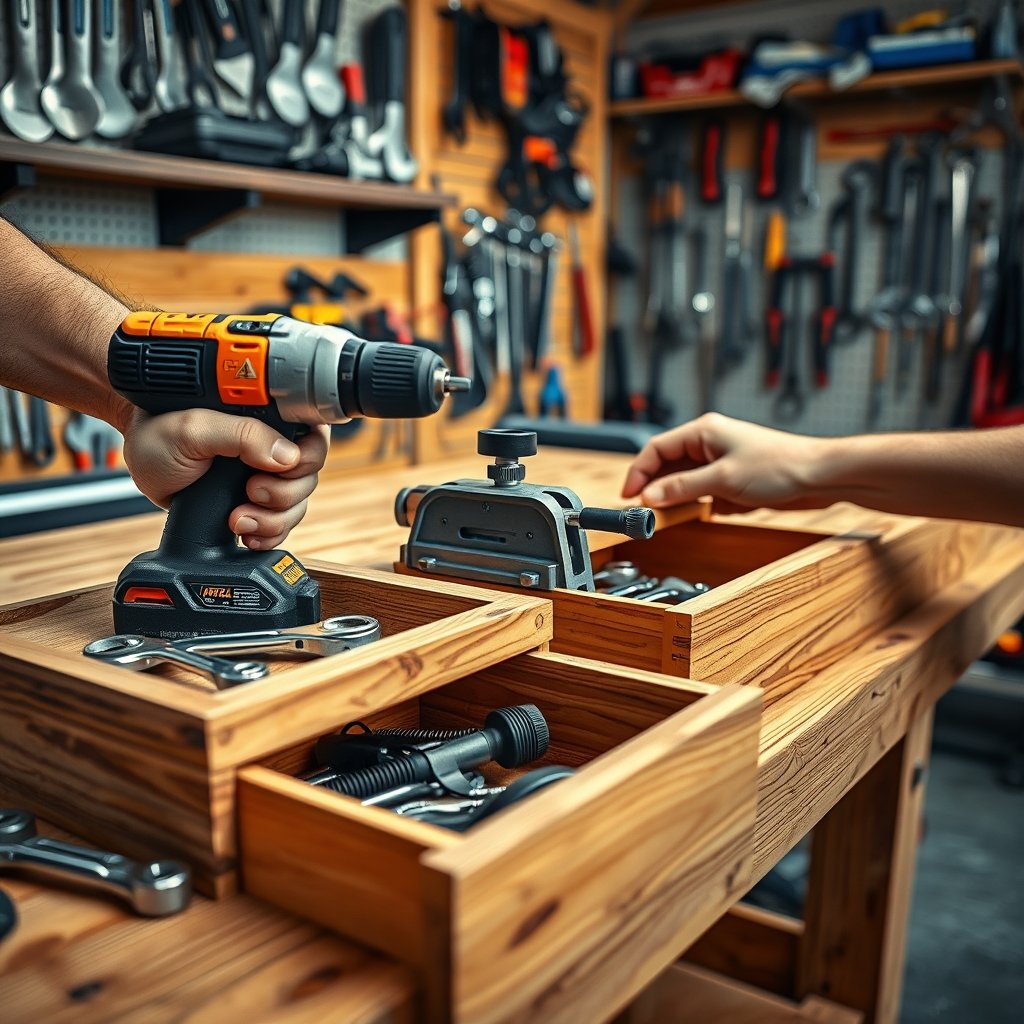
If you want to conceal power cords, attach a small cable raceway under the bench. Extra outlets on a power strip with surge protection and USB charging can prevent clutter and fried gadgets.
Don’t overlook material quality. Cheaper engineered wood benches may list “high” weight capacities, but the weak point is almost always leg fasteners or the join between top and frame. The best garage workbenches in YYYY have double-bolted assemblies and thicker cross-bracing. For more on easy upgrades, check out practical home improvement products worth adding to your garage routine.
Real-World Feedback: Common Complaints and Drawbacks
No workbench is perfect—even the best sellers. Here’s where most garage workbenches frustrate buyers:
| Issue | Description | Typical Affected Benches |
|---|---|---|
| Wobbling/Instability | Legs flex under heavy lateral loads or if not perfectly assembled. | Most entry-level and some mobile models |
| Wheel Stability | Thin or small casters can tip, jam, or make the bench move during drilling or hammering. | Mobile benches (Betterhood, CAMMOO, Husky) |
| Weight Capacity Limit | Many advertise “up to 500–600 lb” but fail when loaded unevenly, especially with MDF/engineered tops. | Budget and mid-market, non-solid wood benches |
| Short or Awkward Power Strips | Affordable benches may have 4–5 ft cords, forcing you to add extensions or place the bench near outlets. | Seville Classics, Kobalt, others |
| Flimsy Assembly | Pre-drilled holes don’t always align, and many users report needing to “double-tighten” for a solid feel. | Seville Classics, entry-level steel benches |
These issues are echoed by both pro reviewers and everyday buyers. For example, this detailed breakdown specifically calls out short power cords and flexy legs as ongoing pains. Even “premium” benches can frustrate if assembly is rushed or instructions lack diagrams.
For even more realistic renovation and gear advice, see our no-nonsense guide to avoiding common home improvement mistakes.
DIY Workbench vs. Ready-Made: Cost, Difficulty, and Customization
If you’re handy, building a DIY workbench can save money and offer unbeatable customization:
- DIY Workbench Materials: Use solid 2x4s, plywood, or even reclaimed wood for the frame and top. Metal pipe or angle iron upgrades are easy for advanced DIYers.
- Budget Range: Most DIY benches cost $175–$320 in new materials, or as little as $30–$50 if you’re sourcing free pallets and scraps [source].
- Customization: DIY lets you optimize for your height, garage footprint, and workflow—add shelves, vices, or electrical outlets exactly where you want.
- Drawbacks: Requires tools, workshop space, and time (4–8 hours typical). Unless you fasten joinery securely, stability may fall short of commercial benches. Complex features like height adjustment or integrated wiring can be tricky.
Ready-made garage workbenches offer fast setup and warranty peace of mind, but you may pay extra for upgrades or modifications later. If you’re new to woodworking or want plug-and-play organization, prefabs are a safe bet—but savvy DIYers can often out-build a box-store solution.
Need more ideas for impactful yet approachable garage projects? Explore our guide to beginner DIY home improvements to boost your confidence and skillset.
New Essentials Missing from Top Ranked “Best Workbench for Garage” Lists
Most “best garage workbench” guides review only the obvious: price, surface, a few storage tricks. Here’s what savvy buyers wish they’d known up front:
- Height Adjustability: Not just for comfort—manual or electric-lift benches suit families or task stacking (sawing, sanding, painting) without fatigue.
- Dust and Vibration Control: Few benches offer dedicated dust ports or mats—yet this minimizes clean-up and extends tool life, especially in woodworking.
- Modular Expansion: Interchangeable accessories like bench dogs, router plates, tool rails, and custom racks help match your workflow over time.
- Power Management/Surge Protection: Some benches include advanced power strips (with USB-C, surge suppression, even wireless charging)—great for battery tools and laptops.
- Warranty and Durability Testing: Longer warranties (>2 years) and real-world, long-term testing matter more than specs on paper.
- Ergonomics: Look for key dimensions—proper work height (usually 34–39 inches), rounded corners, and optional anti-fatigue mats for flooring.
- Sustainability: FSC-certified woods, recycled steel, or upcycled panels—especially if you’re eco-conscious or want to reduce chemical off-gassing in enclosed garages.
- Safety Certifications: ETL or UL-listed power components, pinch-free soft-close drawers, and non-slip feet all add a practical layer of security.
Make a feature “must-have” checklist before ordering. It’s easier to adapt storage after-the-fact than to add robust, ergonomic support or dust management later. For deep dives into sustainable home upgrades, check our expert overview of energy-efficient improvements to bring your garage up to date.
Garage Workbench FAQs: Buyer Considerations for YYYY
How big should my garage workbench be?
Most home users do best with at least 48 inches of width and 24 inches of depth. If you have space, 60–72 inches allows safe material handling and keeps tools within reach. Measure your garage layout—don’t forget swing zones for car doors or large tools.
What’s a safe weight capacity for a garage workbench?
The Husky 8-foot model has been tested to 1,450 lb. Most affordable wood/engineered surfaces are rated 500–600 lb but may flex under heavy impact or if overloaded on one end. For auto work or machinery, steel-top benches or DIY units with extra leg bracing are best. Always check the specs before buying.
Metal or wood workbench—which is better?
Wood tops absorb shock and noise and are easier on tool edges. Steel is obvious for welding, auto, or chemical work. Mixed steel-frame with wood surface benches are popular for being sturdy, versatile, and easy to repair or refinish.
Can I move my workbench around the garage?
Mobile benches with locking casters work well in multi-use garages but watch out for thin wheels (which can slip or stick). Always lock wheels before starting projects. For maximum stability, consider a stationary workbench (bolted down if needed) or removable weights for extra ballast.
Do I really need a built-in power strip?
If you use power tools, chargers, or USB devices, a built-in strip is a game changer. Just be sure it has enough outlets, USB-C if possible, and a long enough cord to reach your nearest outlet. Otherwise, invest in a heavy-duty, surge-protected strip you can mount yourself.
For more hands-on gear tips, check our new guide to finding the best power tools for any project.
Final Recommendations: Matching the Right Workbench to Your Needs
Choosing the Best Workbench for Garage in YYYY boils down to your workspace, budget, and must-have features—there’s no “one-size-fits-all.” For small or mid-sized garages, the CAMMOO Heavy-Duty Adjustable Bench is incredibly versatile and affordable. For serious load capacity, look at the Husky or Sjobergs models for heavy use and maximum durability. Always check reviews for leg stability, wheel quality, and assembly detail before you buy.
Ready to start your own workshop upgrade? Compare real user experiences, focus on the features that matter to your workflow, and avoid impulse buys. A quality garage workbench is an investment that pays back with years of smoother projects and less frustration. Explore more home improvement strategies to get the most out of every square foot.

Your ideal garage starts with the right foundation—choose wisely, and build better this year.
—