

### Blog Post:
Best Ceiling Fans can save you hundreds each year on energy bills—without sacrificing comfort. Whether you’re a homeowner, renter, or facility manager in the US or India, this post delivers hard-hitting numbers, real-world insights, and practical tips for choosing the most energy-efficient and smart ceiling fans in 2026.
Key Takeaways
- Switching to energy-efficient and smart ceiling fans can cut home cooling costs by up to 40% in 2026.
- BLDC and Energy Star fans save $150–$250/year and use 60% less power than conventional models.
- Many “smart” ceiling fans offer integration but can have compatibility issues and higher upfront costs—don’t skip installation research.
- Why Choose an Energy Efficient Ceiling Fan in 2026?
- Quantifying Energy Savings—How Much Can You Really Save?
- BLDC vs AC Motors: Real-World Performance and Lifetime Value
- Smart Ceiling Fans—Are They Worth the Upgrade?
- Advanced Integration: How Ceiling Fans and HVAC Work Together
- Real-World Challenges: Installation and Maintenance Tips
- Top Picks: The Best Ceiling Fans for Every Room in 2026
- Frequently Asked Questions About Ceiling Fans and Cooling Solutions
Why Choose an Energy Efficient Ceiling Fan in 2026?
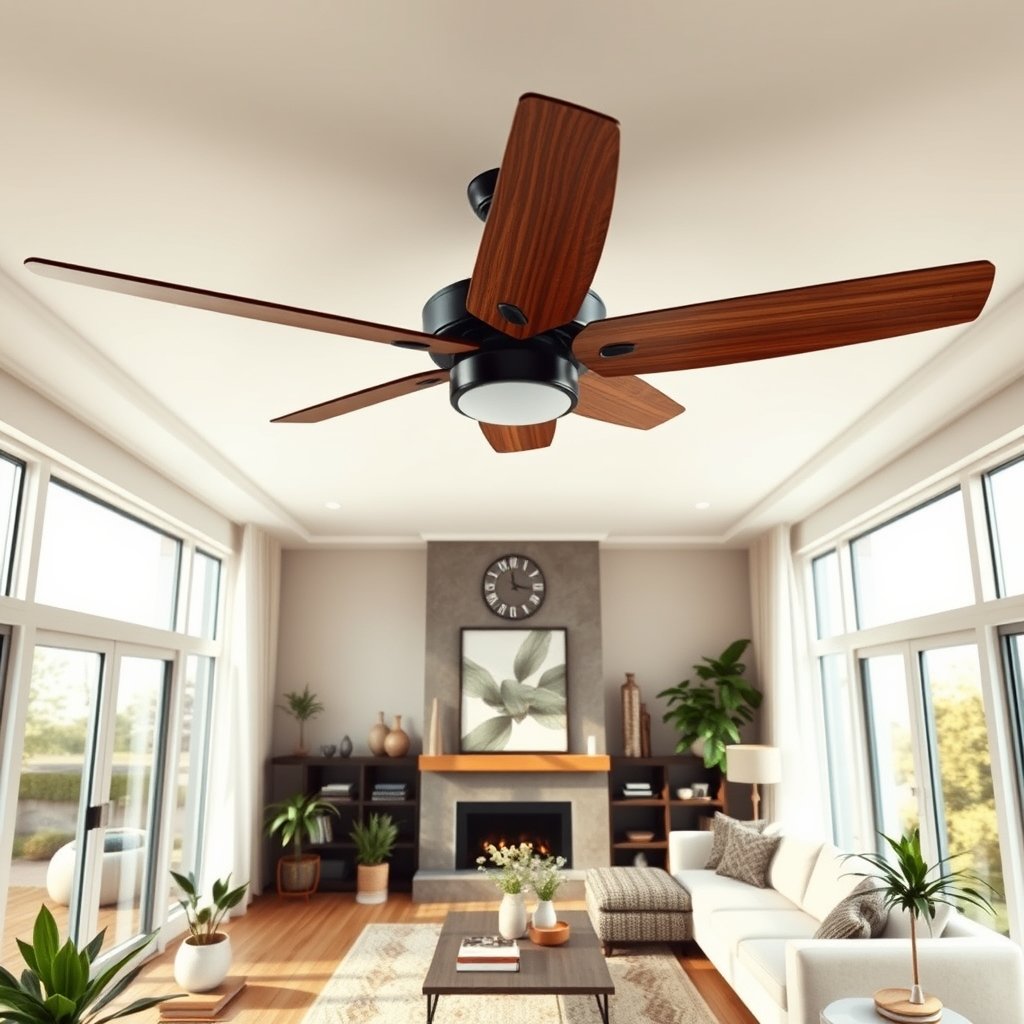
The average household is looking for better cooling solutions that don’t destroy their power bill. Compared to air conditioners, energy-efficient ceiling fans draw only 10–120 watts (ACs often use 500–3500 watts). Used alone or with air conditioning, ceiling fans deliver comfort, better airflow, and big cost savings. In fact, running fans alongside AC can cut your utility bills by up to 20%. The Department of Energy confirms that modern ceiling fans provide the best value cooling for most homes and light commercial spaces. Besides lower costs, using ceiling fans supports sustainability—helping you shrink your home’s energy footprint while staying comfortable all year.
Quantifying Energy Savings—How Much Can You Really Save?
Let’s get specific about the savings you should expect in 2026. Swapping outdated fans or box fans for new energy efficient ceiling fans—especially models with BLDC motors or Energy Star ratings—can slash your fan energy use by 25–35%. That means typical US homes pocket $150–$250 per year in real savings. Energy Star fans use up to 60% less power than old-school models [source]. In India and other hot climates, BLDC fans are especially popular for their efficiency and low running cost.
Consider these steps to maximize energy savings:
- Prioritize BLDC and Energy Star-certified fans when buying new or replacing old units.
- Pair ceiling fans with your home’s air conditioning or smart thermostat for automatic temperature balance; schedule fans for peak hours only.
- Use fans in occupied rooms only; switch off when not in use to avoid wasted electricity.
- Look for models that include integrated LED lights—these can reduce your lighting energy costs further (by up to 40% in some rooms [source]).
If you’re looking for other cost-cutting home upgrades, our energy efficient home guide offers dozens more actionable ideas.
BLDC vs AC Motors: Real-World Performance and Lifetime Value
Motor technology is the hidden hero that sets the best ceiling fans apart. BLDC (Brushless Direct Current) fans deliver quieter operation at lower power requirements, while standard AC (Alternating Current) motors tend to be noisier and less efficient. Why does it matter? Consider both the up-front price and the full lifetime value (repair, noise, and power savings).
| Feature | BLDC Motor Fan | AC Motor Fan |
|---|---|---|
| Typical Power Usage | 25–40W | 65–120W |
| Annual Cost Savings | $150–$250 (US avg.) | Baseline |
| Noise Level | Low | Noticeable |
| Reliability | High (fewer moving parts) | Standard |
| Smart Integration | Often supported | Limited |
| Upfront Cost | Medium–High | Low |
The payback period for a BLDC motor fan versus a classic AC motor model is usually between 1–2 years thanks to those energy savings. Maintenance is lower too, since brushless designs generate less heat and friction.
If you value longevity and silent operation, opt for BLDC—especially in bedrooms, offices, and any setting that needs quiet cooling.
For more on sustainable appliances, read our affordable home upgrades guide.
Smart ceiling fans are increasingly popular in 2026, promising app, Wi-Fi, and voice control. Reality check: while some models like the Hunter Symphony and Atomberg Renesa deliver reliable smart-home integration and true energy optimization [source], many budget “smart” fans fall short. User complaints highlight high prices, unreliable remotes, limited Google/Alexa compatibility, and—surprisingly—no energy optimization (the fan just turns on/off, wasting power at high speeds).
To make your upgrade worthwhile:
- Check if the fan supports your smart-home system (Wi-Fi, app, AND voice control).
- Seek brands with strong customer reviews and responsive support—avoid “smart” models with generic remotes and no real tech support.
- Consider the future: a non-smart BLDC fan paired with a smart thermostat often delivers better comfort and savings than a poorly integrated “smart” fan.
Most buyers should prioritize energy efficiency, not just features. For the “best ceiling fans” that are truly smart, focus on models that offer both energy savings and full integration into your existing smart home setup.
Advanced Integration: How Ceiling Fans and HVAC Work Together
Advanced integration creates the big wins: thermostat-controlled ceiling fans, paired with your HVAC system, boost comfort and maximize savings. Few competitor guides explain this, but here’s how it works for real homes:
- Set your smart ceiling fan (or fan-enabled thermostat) to run fans whenever rooms are occupied and cooling loads are high—then cycle off when not needed.
- Raise your AC thermostat setting by 4°F; run ceiling fans to maintain comfort. The result: up to 40% lower cooling costs, plus even room temperatures.
- Use reversible-direction fans in all seasons (cooling in summer, destratifying in winter).
Industrial and large residential environments can leverage HVLS (high-volume, low-speed) fans—see this guide for pro integration strategies.
If you’re building out a full smart-home system, check out our smart home devices guide for thermostats, lighting, and other upgrades that pair well with energy efficient ceiling fans.
Real-World Challenges: Installation and Maintenance Tips
The right fan only works if it’s installed and maintained correctly. Here are the key issues buyers actually face (but top-ranking “best ceiling fan” articles tend to skip):
- Cathedral/high ceiling installations: Standard mounting kits usually aren’t long enough. Order an extended downrod and double-check mounting bracket compatibility.
- Retrofitting in older homes: Expect to rewire and sometimes replace old fan boxes. Confirm your ceiling box is rated for fan loads—not just lighting.
- Smart fan hiccups: Cheap models may require awkward remote pairing, weak Wi-Fi signals, and confusing app installs.
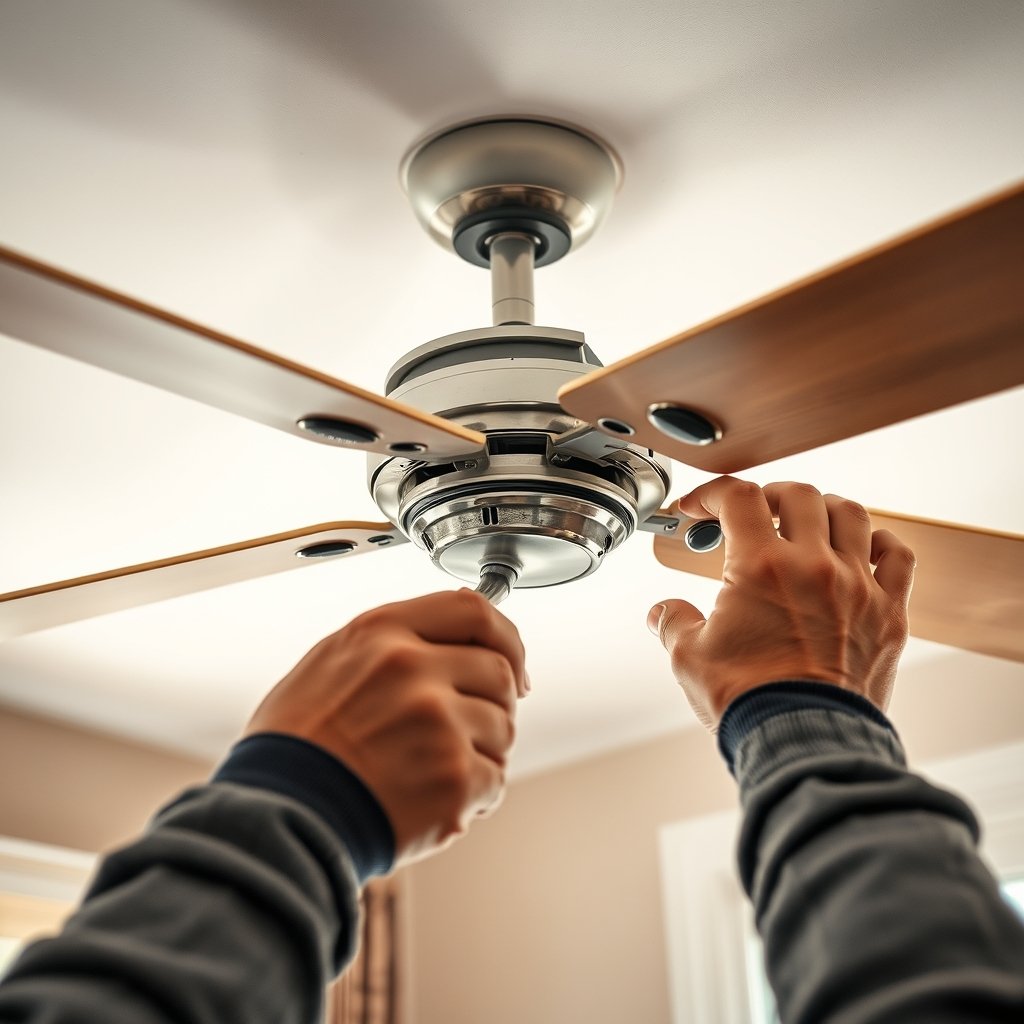
- Maintenance: BLDC fans need less maintenance but still require periodic blade cleaning and occasional tightening of mounting hardware. Always turn off power at the breaker before any service.
For DIY fans, our DIY home repairs guide has step-by-step installation and troubleshooting tips that will save you hours—and headaches.

Top Picks: The Best Ceiling Fans for Every Room in 2026
Here are our research-backed recommendations for the Best Ceiling Fans of this year, tailored to different U.S. and Indian home layouts and needs:
- Best All-Around BLDC Fan: Atomberg Renesa/Studio+ (India), Modern Forms Wynd (U.S.)—ultra-efficient, quiet, smart-ready, top for bedrooms and living rooms.
- Best Smart Ceiling Fan: Hunter Symphony (U.S.), compatible with Alexa/Google/Wi-Fi, and Atomberg Renesa Smart (India). Excellent reviews for both energy use and user experience.
- Best Energy Star Fan: Emerson Luray Eco—uses 60% less electricity, robust for all climates.
- Best Outdoor Fan: Minka-Aire Xtreme H2O, sealed for verandas and patios.
- Best Fan with Integrated Lights: Havells Stealth Air (India), Casablanca Wisp (U.S.), and similar models can reduce cooling and lighting costs by up to 40% [source].
Before choosing, match your fan size (blade span) to the room and prioritize energy ratings. Ceiling fans with DC motors and LED lighting offer the best ROI for most families and facility managers. For kitchen upgrades, see our hidden kitchen storage tips. And for your next home upgrade, our best home improvement projects roundup can guide you to further savings and comfort.
Want to see more trends? The ceiling mounted fan market is booming, with a projected 6.8% CAGR through 2030 (full research report).
Frequently Asked Questions About Ceiling Fans and Cooling Solutions
How much can I really save with an energy efficient ceiling fan?
Most users save $150–$250 per year in the US, and up to 40% in India when running efficient fans in tandem with AC. Individual savings vary by usage, electricity rates, and climate.
Are smart ceiling fans worth it?
Only if you need full app/voice integration and energy optimization. Many smart models struggle with compatibility. Often, a quality BLDC fan plus a smart thermostat provides more consistent savings and fewer headaches.
What’s the difference between BLDC and AC motor ceiling fans?
BLDC fans use brushless motors, offering quieter operation, lower power use (25–40W), and longer lifespan. AC motors are cheaper up front but less efficient and noisier.
What’s the best ceiling fan for high ceilings or large rooms?
Choose a model with a long downrod, strong airflow rating (CFM above 5,000), and, if possible, Energy Star or BLDC tech. HVLS (high-volume, low-speed) fans are excellent for extra-large spaces.
Is the market for energy efficient ceiling fans growing?
Yes. According to Grand View Research, the global ceiling mounted fan market is projected to grow at 6.8% CAGR through 2030, fueled by demand for sustainable and smart solutions.
—