

### Blog Post:
Home Maintenance Schedule is the secret weapon every modern homeowner needs to prevent costly repairs, save money, and protect your biggest investment—your house. If you’ve ever felt overwhelmed, forgotten a critical task, or worried about missing out on new tech or safety steps, this realistic guide is for you.
Key Takeaways
- A structured Home Maintenance Schedule protects your home’s value and cuts expensive surprise repairs.
- Most checklists miss modern essentials—think smart sensors, pest checks, and tech-driven annual maintenance tasks.
- Consistency beats perfection: simple monthly routines and smart reminders help you stay on track and stress less.
- Why Every Homeowner Needs a Home Maintenance Schedule
- Step-by-Step: Building Your Actionable Homeowner Maintenance Schedule
- Advanced Analysis & Common Pitfalls in Home Maintenance
- Conclusion
- Frequently Asked Questions
Why Every Homeowner Needs a Home Maintenance Schedule
Deferred maintenance is one of the fastest ways to turn your dream house into a money pit. When you neglect routine upkeep, small problems grow into big expenses—think roof leaks, HVAC breakdowns, or water damage from hidden leaks. In fact, about 35 percent of the most expensive home repairs reported this year could have been avoided with a consistent, year-round Home Maintenance Schedule.[5] A well-kept home not only maintains property value but also delivers peace of mind.

Being proactive means less time scrambling for emergency repairs and more money in your pocket for things you actually enjoy. Plus, most home insurance policies expect regular homeowner maintenance to remain valid—if damage results from neglect, you could get denied on a claim.[4]
Homeowner Maintenance Schedules are about more than cleaning gutters or changing air filters. They’re your roadmap for safety, comfort, energy efficiency, and investment protection. If you’re only reacting to what breaks, you’re paying the “repair tax” year after year.
Want even bigger returns? Combine routine maintenance with smart home upgrades—like energy-efficient appliances or hidden storage solutions. Check out these practical ideas for improving home efficiency and find ways to boost your property’s resale value too.
Step-by-Step: Building Your Actionable Homeowner Maintenance Schedule
If you’ve ever looked at a giant checklist and felt instant overwhelm, you’re not alone. Many homeowners drop monthly maintenance routines because they’re too long, confusing, or full of outdated tasks.[9] Let’s break down a realistic, modern approach—no guilt, no fluff:
Monthly Maintenance Essentials
- Test smoke detectors and carbon monoxide detectors; replace batteries if needed.
- Check water-leak sensors and smart-home alerts (especially in basements, kitchens, and behind appliances).
- Examine HVAC filters—replace or clean as needed.
- Walk through your house visually—look for leaks under sinks, new cracks, pest evidence, or strange odors.
- Clean garbage disposals, range hood filters, and inspect appliance cords/plugs for wear.
- Flush unused drains with water to prevent dry traps.
- Review home maintenance apps or digital checklists. See How to create a monthly home maintenance checklist.
Quarterly & Seasonal Must-Dos
- Test GFCI outlets and reset breakers.
- Check and clean dryer vents and hoses (this is a fire safety must—don’t skip).
- Visually inspect attic and crawlspaces for leaks, insulation issues, or animals.
- Lubricate door hinges, locks, and garage doors.
- Clean gutters and downspouts, especially after heavy storms.
- Check exterior caulk and weatherstripping—seal gaps before energy bills spike.
- Scan your home’s exterior for cracked siding, chipped paint, or roof shingle issues. Need a full exterior guide? See these proven home improvement ideas.
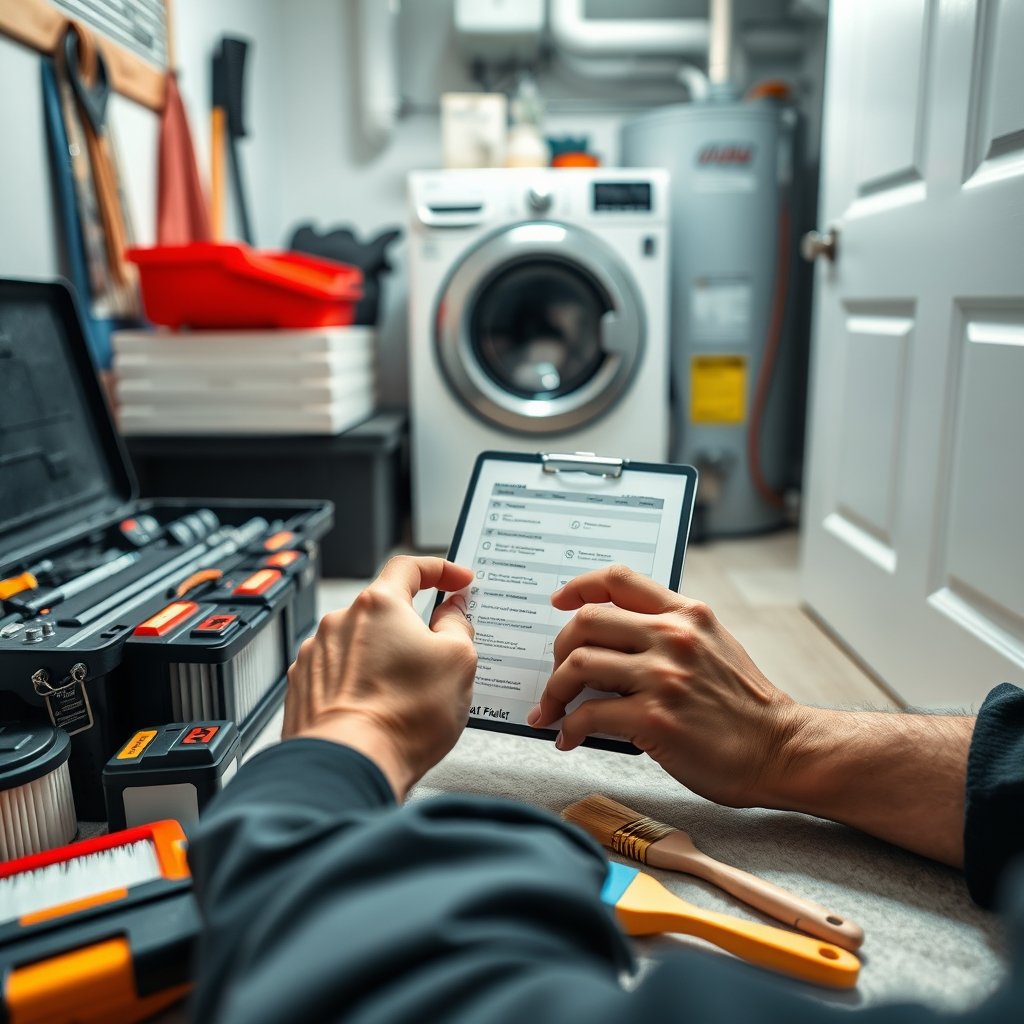
Annual Maintenance (Don’t Miss These!)
- Service heating/cooling systems—consider professional checkups.
- Inspect and flush water heaters; check or replace the anode rod to extend water heater life.
- Reseal driveways, walkways, and patios to prevent cracking and water infiltration.
- Test and regulate water pressure with a gauge—high pressure damages appliances and pipes.
- Arrange a professional pest inspection to catch termites or rodents early.
- Clean out dryer vents fully—don’t just rely on lint traps.
- Schedule professional chimney or fireplace cleaning if applicable.
- If you have solar panels or high-efficiency appliances, follow manufacturer cleaning and inspection guides.
- Check sump pumps, foundation drains, and basement moisture levels.
- Refresh your homeowner maintenance schedule at new year’s or after major renovations. Explore DIY home improvement strategies that fit your maintenance efforts.
Tip: Always customize your checklist to fit your home and climate. For seasonal breakdowns, see ready-to-use guides for Spring, Summer, Fall, and Winter.
Advanced Analysis & Common Pitfalls in Home Maintenance
Even great intentions go sideways when reality hits. According to recent research, a whopping one-third of the most expensive home repairs reported in recent years happened because basic, consistent maintenance was missed.[1]
Many owners struggle with:
- Lack of time—schedules are packed, and weekends disappear fast.
- Forgetting which task is due next (especially seasonal or obscure items).
- Feeling overwhelmed by long, unprioritized lists.
- Assuming “low priority” tasks like dryer vent cleaning or water heater anode inspection can always wait.
- Unaware that newer systems (smart sensors, solar, high-efficiency appliances) need specific checks rarely listed in old checklists.[6]
Here’s how traditional checklists compare to an updated, proactive 2026 approach:
| Checklist Item | Old Checklist | Modern Checklist |
|---|---|---|
| Change HVAC filters | ✔ | ✔ plus smart sensor alert integration |
| Test smoke alarms | ✔ | ✔ plus carbon monoxide detector battery check |
| Clean gutters | ✔ | ✔ |
| Inspect water heater | ✔ include annual anode rod check | |
| Dryer vent cleaning | ✗ | ✔ annual, not just lint screen |
| Smart home sensors | ✗ | ✔ monitor leaks, HVAC, energy, etc. |
| Driveway & patio sealing | ✗ | ✔ annual as needed |
| Pest & termite checks | ✗ | ✔ annual or biannual inspections |
| Pump, sump, foundation | ✗ | ✔ test yearly or before wet season |
| Solar panel cleaning | ✗ | ✔ schedule per manufacturer |
When life gets busy, it’s these overlooked tasks that often cause the most expensive headaches. Remember, consistency > perfection: even ticking off 80% of your Homeowner Maintenance Schedule beats leaving it all until something breaks!
Homeowners tired of feeling behind can simplify routines with hidden storage solutions and smart upgrades. Explore appliance garage ideas and creative space-saving cabinets for less daily clutter.

Conclusion
A smart, flexible Home Maintenance Schedule is your best defense against surprise repairs and future headaches. Prioritize safety, tech, and value-driven tasks, automate your reminders, and adjust your checklist as your house changes. Start small, stay consistent, and remember: maintenance isn’t about perfection—it’s about protecting what matters.
Ready to take control? Try our step-by-step Home Maintenance Checklist or download our printable version today.
Frequently Asked Questions
How often should I review my Home Maintenance Schedule?
Review and update your Home Maintenance Schedule at least once a year—ideally at the start of each year or after major home upgrades or renovations. Adjust the checklist as your home, appliances, or lifestyle change.
What maintenance tasks do most homeowners forget?
Commonly forgotten tasks include dryer vent cleaning, water heater anode rod inspection, pest checks, carbon monoxide detector battery replacement, and checking smart home sensor alerts.
Are all “annual” tasks really needed every year?
Not always—follow manufacturer recommendations for tech and specialty systems. Some tasks (like driveway sealing or solar panel cleaning) are “as needed.” For most safety items (alarms, vent cleaning), annual is the safest baseline.
How can I stick to a maintenance routine when I’m busy?
Break the schedule into manageable monthly chunks, automate reminders on your calendar, and use a digital checklist. Delegate or hire out the most technical jobs. Small, steady effort always beats burnout.
Can I do most maintenance tasks myself?
Yes—many routine checks and cleanings are beginner-friendly. For jobs involving wiring, gas, or major appliance service, hire a licensed professional for safety.
—